A certified wheel alignment service does more than straighten a steering wheel. It helps your vehicle track correctly, protects expensive tires from uneven wear, and gives you more predictable control on wet highways, busy city streets, and long hauling routes. For drivers and fleet operators, that means safer handling and fewer avoidable costs.
What Certified Wheel Alignment Service Actually Means
Wheel alignment is the adjustment of the angles that determine how your tires meet the road. The main measurements are camber, caster, and toe. Small deviations in any of these settings can change how a vehicle steers, brakes, and wears its tires.
Certified service means the work is performed by trained technicians using calibrated alignment equipment and manufacturer-based specifications. The technician does not simply adjust the front end until the steering wheel looks straight. They inspect the suspension and steering components first, measure the existing angles, make the appropriate adjustments, and verify the results before returning the vehicle to service.
That process matters because alignment symptoms can have more than one cause. A pull to one side may come from alignment, but it can also be caused by tire pressure, tire wear, a damaged tire, a sticking brake component, or worn suspension parts. A dependable shop identifies the source before recommending work.
Signs Your Vehicle May Need an Alignment
A vehicle rarely needs an alignment without giving some warning. The most common sign is a vehicle that drifts or pulls left or right when driving on a reasonably level road. A crooked steering wheel while traveling straight is another clear signal that the alignment should be checked.
Tire wear often tells the story before the driver feels a handling problem. Wear concentrated on the inside or outside edge of a tire may point to incorrect camber. Feathering, where the tread feels sharp in one direction and smooth in the other, is commonly linked to toe settings. Ignoring those patterns can ruin a tire long before its expected service life.
You should also schedule an inspection after a hard pothole strike, curb impact, collision, or suspension repair. Even a minor impact can shift an alignment angle enough to affect tire wear. For commercial trucks, trailers, and fleet vehicles, repeated loading, rough yards, and high-mileage highway use can make regular alignment checks a practical maintenance decision rather than a reaction to a problem.
Why Precision Alignment Protects More Than Tires
Tires are often the first expense affected by poor alignment, especially on vehicles that travel long distances. A misaligned tire is dragged slightly across the pavement instead of rolling cleanly. That friction creates heat, wears down tread, and can lead to early replacement.
Alignment also affects steering response. When the geometry is within specification, the vehicle is more likely to hold a steady line and return predictably after a turn. This is especially valuable during highway driving, towing, or carrying commercial loads, where small handling issues become more noticeable and more tiring over time.
Fuel economy can be affected as well. The difference is not always dramatic on one short trip, but unnecessary rolling resistance adds up across regular commuting or a fleet operating every day. Correct alignment helps reduce that resistance while supporting more even tire performance.
What Happens During a Professional Alignment
A proper alignment appointment begins with a basic vehicle condition check. Technicians inspect tire condition and pressure, look for loose or worn steering and suspension components, and check for damage that could prevent the vehicle from holding an adjustment. Aligning a vehicle with failing parts may create a temporary improvement, but it will not solve the underlying issue.
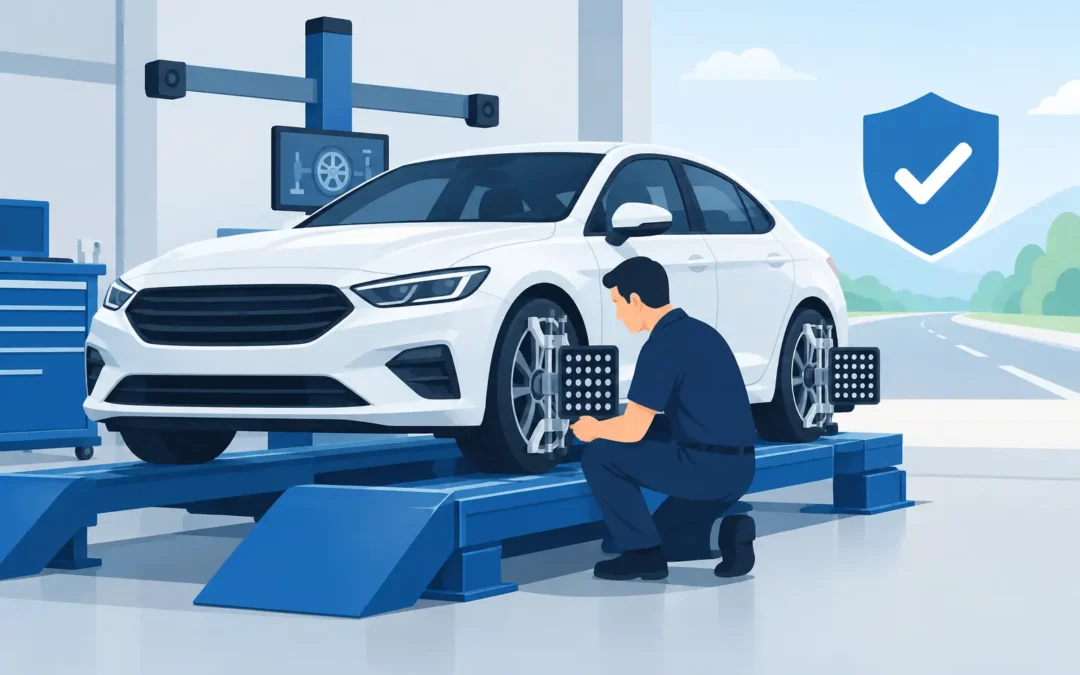
The vehicle is then positioned on alignment equipment that measures each wheel angle. Current readings are compared with the specifications for that specific vehicle. The technician adjusts the available alignment points and centers the steering wheel as part of the process.
After adjustments are complete, the final readings should be verified. Many shops can provide a before-and-after measurement report, which gives drivers and fleet managers a useful record of the work performed. If an angle cannot be adjusted because a part is bent, seized, or worn, the technician should explain the issue clearly before additional repairs are made.
Passenger Vehicles, Trucks, and Trailers Need Different Attention
The goal is the same for every vehicle: stable handling and even tire wear. The service approach, however, depends on the vehicle. A passenger car may need a straightforward four-wheel alignment after hitting a pothole or replacing suspension components. A pickup used for towing may need added attention to tire condition, ride height, and front-end wear.
Heavy-duty trucks and trailers bring different demands. Load weight, axle configuration, suspension design, and high annual mileage all affect alignment needs. Trailer alignment is particularly important because an axle that does not track correctly can wear tires quickly and create drag behind the tow vehicle.
For fleets, tracking alignment results can help identify recurring problems. If one unit repeatedly shows irregular wear, the cause may be more than alignment. Overloading, damaged components, route conditions, or poor tire maintenance may also need attention.
How Often Should You Schedule Alignment Service?
There is no single mileage interval that fits every vehicle. Many drivers benefit from having alignment checked annually, during tire replacement, or whenever unusual wear or handling symptoms appear. If your vehicle regularly encounters rough roads, construction zones, potholes, curbs, or heavy loads, more frequent checks are sensible.
Commercial operators should build alignment inspections into their preventive maintenance plan. A planned check is usually easier and less costly than taking a truck or trailer out of service because tires have worn prematurely. The right interval depends on mileage, load cycles, equipment type, and operating conditions.
Seasonal tire changes are also a good opportunity to inspect tread wear. Tires are already off the vehicle or easy to access, and uneven patterns can be caught before the next season of driving adds more damage.
Questions to Ask Before Booking Alignment Work
Price matters, but the lowest advertised alignment is not always the best value. Ask whether the service includes a suspension and steering inspection, whether all four wheels will be measured when applicable, and whether you will receive final alignment readings. Those details help you compare services fairly.
It is also worth asking what happens if worn parts are found. A professional service provider should separate the inspection findings from the recommended repair, explain what is urgent, and tell you whether the vehicle can be aligned safely in its current condition. Honest answers help you make the right decision for your vehicle and budget.
Milton 401 Tire & Alignment Centre provides alignment support for everyday vehicles as well as trucks, trailers, and commercial fleets. The focus is practical: identify the cause, make precise adjustments, and help keep your equipment road-ready with minimal downtime.
Do Not Wait for a Tire to Fail the Test
A tire can look acceptable from the outside while losing tread rapidly on one edge. By the time the wear becomes obvious, the tire may already be too damaged to recover through alignment alone. Checking your vehicle when the steering changes, after an impact, or during regular tire service gives you the best chance to correct the problem early.
If your vehicle is pulling, the steering wheel is off-center, or your tires are wearing unevenly, book a professional inspection before another long commute, delivery route, or highway trip. A precise alignment is a small service that can protect the parts of your vehicle that work hardest every mile.