
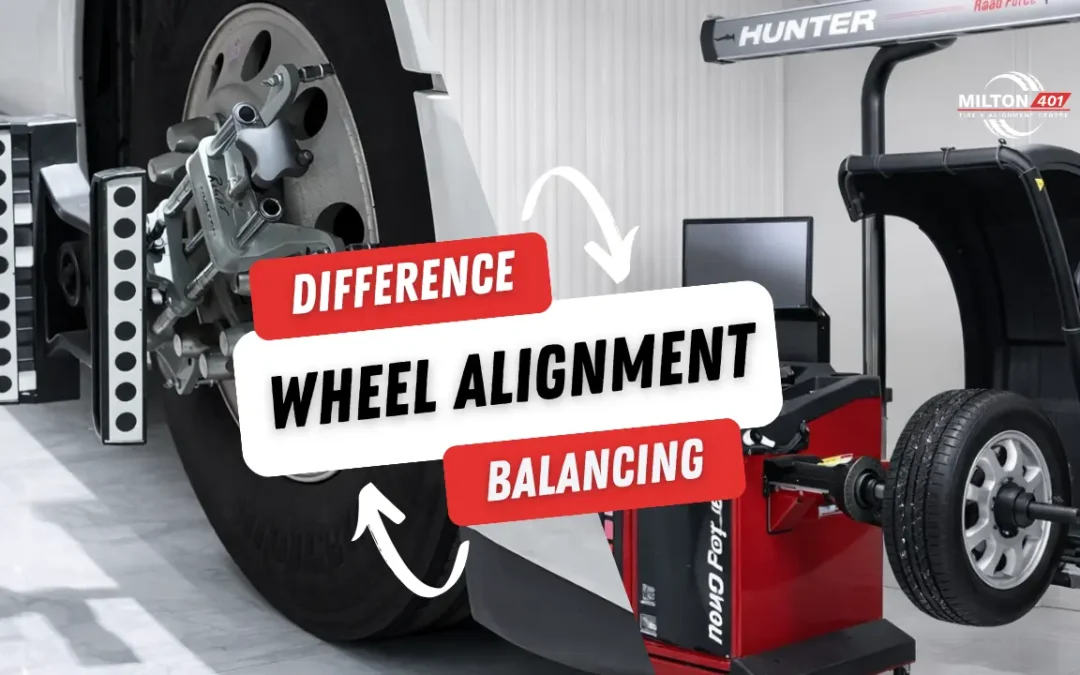
A vehicle comes in with a shaky steering wheel at highway speed, and the driver is sure it needs an alignment. Another comes in pulling to one side with no vibration at all, and the issue turns out not to be balancing. That mix-up is common, because the difference wheel alignment and balancing is not always obvious from the driver’s seat.
Both services affect how your vehicle drives, how your tires wear, and how much confidence you have on the road. But they solve different problems. If you understand what each one does, you can book the right service sooner, avoid premature tire wear, and reduce the chance of bigger suspension or tire issues later.
The difference between wheel alignment and balancing
Wheel alignment is about angles. It adjusts how the wheels are positioned relative to each other and to the road, based on manufacturer specifications. When alignment is off, the tires do not meet the road the way they should, and that changes steering feel, handling, and tire wear.
Wheel balancing is about weight distribution. A tire and wheel assembly should rotate evenly, but small weight differences can create vibration as speed increases. Balancing corrects that by placing small weights on the wheel so the assembly spins smoothly.
In simple terms, alignment affects direction and tire contact. Balancing affects rotation and smoothness. One does not replace the other.
What wheel alignment actually fixes
When a technician performs an alignment, they are not straightening the tire itself. They are measuring and adjusting suspension angles such as camber, caster, and toe. Those angles control how the tire sits on the road and how the vehicle tracks when you drive straight or turn.
A poor alignment often shows up as the vehicle pulling left or right, an off-center steering wheel, or uneven tread wear. You might notice one shoulder of the tire wearing down faster than the other, or feathering across the tread. On a work truck, trailer, or fleet vehicle, that kind of wear can become expensive quickly because it shortens tire life and affects stability under load.
Alignment problems usually come from impact or wear. Hitting a pothole, curb, road debris, or rough jobsite surface can knock angles out of spec. Worn suspension or steering parts can do the same thing. That is why a proper alignment service is more than a quick adjustment. It starts with accurate measurements and a close look at the components that affect those settings.
What wheel balancing actually fixes
Balancing deals with vibration caused by uneven mass in the rotating assembly. Even a new tire can have slight heavy spots, and a wheel can as well. At lower speeds you may not feel much, but once you reach highway speed, that imbalance can turn into a steering wheel shake, seat vibration, or a general rough ride.
Balancing does not correct a pull, and it does not fix alignment angles. What it does is help the tire roll smoothly without hopping or wobbling as it spins. That matters for comfort, but it also matters for tire wear, suspension stress, and driver fatigue on longer trips.
For commercial operators, balancing can make a noticeable difference in road feel and component life. A truck or trailer that spends long hours on major routes puts constant load on tires, hubs, and suspension parts. If an imbalance is ignored, the vibration does not just stay in the wheel. It transfers through the vehicle.
Difference wheel alignment and balancing in real-world symptoms
The easiest way to understand the difference wheel alignment and balancing makes is to look at the symptoms.
If your vehicle pulls to one side, the steering wheel sits crooked when driving straight, or the tires show uneven edge wear, alignment is the more likely issue. If your vehicle drives straight but vibrates more as speed increases, balancing is the first thing to check.
That said, real vehicles do not always follow a clean script. You can have both problems at once. A truck might have a front-end vibration from imbalance and still be scrubbing tires because the toe setting is off. A trailer might track poorly because of alignment while also shaking from an unbalanced assembly. That is why inspection matters.
Why drivers often confuse the two
From a customer’s point of view, both services sit in the same category: the vehicle does not feel right. The steering feels off, the ride feels rough, or the tires are wearing faster than expected. Since alignment and balancing both affect tire performance, it is easy to assume they are interchangeable.
They are not. Balancing will not stop inner-edge tire wear caused by bad camber. Alignment will not remove a speed-related shake caused by an uneven wheel assembly. If the wrong service is performed, the main problem remains and the vehicle still does not drive the way it should.
That is one reason experienced technicians rely on symptoms, measurements, and inspection rather than guesswork. Fast service matters, but accurate diagnosis matters more.
When your vehicle likely needs an alignment
Alignment should be checked any time you notice pulling, crooked steering, or unusual tire wear. It also makes sense after hitting a pothole or curb, after replacing steering or suspension components, and after installing new tires if wear on the old set suggests an angle issue.
For commercial vehicles and fleets, regular alignment checks are part of protecting tire investment. Misalignment on a high-mileage truck or trailer can wear through expensive tires long before their time. When uptime matters, catching the problem early is far more cost-effective than waiting until the tread tells the story.
Seasonal driving conditions can play a role as well. Rough winter roads and repeated impacts can shift alignment over time. Drivers who cover a lot of highway miles may not notice the change right away, but the tires usually do.
When your vehicle likely needs balancing
Balancing is commonly needed when new tires are installed, when a vibration starts at certain speeds, or when a weight has come off the wheel. It may also be needed if a tire has been repaired or if uneven wear has created a change in how the assembly rotates.
A vehicle that feels smooth around town but starts shaking on the highway is giving a classic clue. In many cases, the steering wheel vibration points to a front-wheel imbalance, while vibration through the seat may suggest the rear. But the exact source still needs to be confirmed in the shop.
For drivers hauling loads or covering long distances, keeping wheels balanced is not just about comfort. It helps limit unnecessary wear on tires and suspension parts and supports a more stable ride.
Why both services matter for safety and cost
Alignment and balancing are often seen as maintenance extras until tire wear gets severe or the vehicle becomes difficult to control. In reality, both services protect core parts of your driving experience: steering response, braking confidence, ride quality, and tire life.
Poor alignment increases rolling resistance and causes tires to wear unevenly. That can shorten replacement intervals and reduce traction, especially in wet conditions. Poor balance can create constant vibration that adds stress to bearings, shocks, and suspension components.
For a passenger vehicle, that means more noise, less comfort, and higher tire costs. For a commercial vehicle, it can mean downtime, reduced driver confidence, and added operating expense. Neither issue is worth leaving unchecked for long.
Getting the right service the first time
The best approach is not choosing alignment or balancing based on a guess. It is bringing the vehicle in when symptoms start and having it assessed with the right equipment by certified technicians. That is especially important for trucks, trailers, and fleet vehicles where heavier loads and longer routes can magnify small problems quickly.
At Milton 401 Tire & Alignment Centre, that practical approach matters because drivers need answers they can trust and service that keeps them moving. Sometimes the solution is a precision alignment. Sometimes it is a balance correction. Sometimes it is both, plus identifying worn parts that caused the issue in the first place.
If your steering feels off, your ride has started to shake, or your tires are wearing faster than they should, the problem may not be complicated, but it does need the right fix. A smooth, straight, road-ready vehicle starts with knowing which service solves which problem, and acting before minor symptoms turn into expensive tire wear.