A steering wheel that pulls to one side and tires wearing out sooner than expected are not problems to put off. In the wheel alignment vs tire rotation conversation, the key point is simple: these are different services that solve different problems. Both protect your tires, handling, fuel economy, and safety, but neither replaces the other.
For daily drivers, staying ahead of both services can prevent an avoidable tire purchase. For trucks, trailers, and commercial fleets, it can also reduce downtime and keep vehicles dependable on the road. Knowing the difference helps you approve the right service at the right time.
What a Wheel Alignment Does
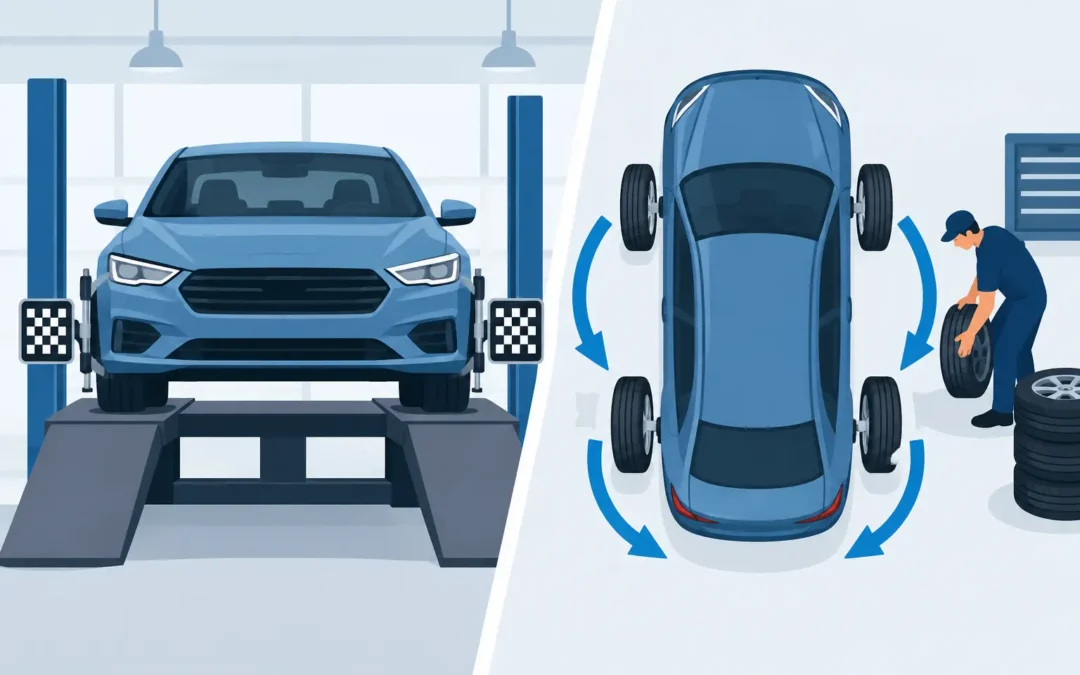
Wheel alignment is an adjustment to the angles of your wheels. A technician uses precision equipment to measure and correct how the wheels sit and move in relation to the vehicle and the road. The goal is to bring those angles back within the manufacturer’s specifications.
The three main alignment angles are camber, caster, and toe. Camber is the inward or outward tilt of a wheel when viewed from the front. Caster affects steering stability and how the steering wheel returns after a turn. Toe describes whether the tires point slightly inward or outward when viewed from above. Small changes in these measurements can create major tire wear over time.
An alignment does not move tires from one position to another. It corrects the vehicle’s geometry so the tires meet the pavement properly. When alignment is off, a tire can scrub across the road rather than roll smoothly. That often creates wear on the inside or outside edge of the tread and can shorten tire life dramatically.
Signs You May Need an Alignment
A vehicle does not always announce an alignment issue with a strong pull. Sometimes the first clue is a tread pattern that looks uneven. You may need an inspection if the steering wheel is crooked while driving straight, the vehicle drifts left or right on a level road, or you feel vibration after an impact.
Potholes, curbs, rough construction zones, and road debris can knock alignment angles out of specification. Worn steering or suspension components can do the same. On work vehicles and trailers, repeated heavy loads and frequent curb approaches can make regular alignment checks especially worthwhile.
What Tire Rotation Does
Tire rotation means moving the tires to different positions on the vehicle in a planned pattern. On many front-wheel-drive vehicles, the front tires wear faster because they handle steering, acceleration, and much of the braking load. Rotation gives every tire a chance to share that work more evenly.
The correct pattern depends on the vehicle, tire type, drivetrain, tire size, and whether the tires are directional or staggered. A technician should follow the tire and vehicle manufacturer’s recommendations. Some tires can move front to rear and cross sides, while directional tires usually stay on the same side of the vehicle.
Rotation does not correct a pull, straighten a steering wheel, or fix uneven edge wear caused by bad alignment. It simply redistributes normal wear. Think of it as managing tire life, not repairing the angles that control how your vehicle tracks.
When to Rotate Tires
Many passenger vehicles benefit from rotation about every 5,000 to 7,500 miles, often at the same time as an oil change or seasonal tire service. Your owner’s manual is the best starting point because schedules vary by vehicle and tire setup.
Commercial vehicles require a more individualized plan. Tire position, axle load, route conditions, driving habits, and tire type all affect wear. A fleet that checks tread depth and tire pressure regularly can spot changes early and schedule rotation or other service before a tire becomes a roadside issue.
Wheel Alignment vs Tire Rotation: The Real Difference
The fastest way to separate the two services is to focus on the problem each one addresses. Alignment corrects wheel angles and vehicle tracking. Rotation changes tire locations to spread wear across the set.
If your front tires are wearing faster than the rear but the tread is even across each tire, rotation may be all you need. If one edge of a tire is wearing much faster than the other, or the vehicle pulls while driving, an alignment inspection should come first. Rotating a badly worn tire to another corner does not stop the underlying cause.
In many cases, a vehicle needs both services over its lifetime. A routine rotation helps tires wear evenly, while an alignment check confirms the vehicle is not damaging those tires in the first place. Treating them as connected maintenance services, rather than choosing one over the other, is usually the most cost-effective approach.
Can You Rotate Tires Without an Alignment?
Yes. Tire rotation is a routine maintenance service and does not require an alignment every time. If the vehicle drives straight, the steering wheel is centered, and tread wear is even, a rotation may be all that is needed.
However, every rotation is a good opportunity to inspect the tires closely. Once the wheels are off, a trained technician can see irregular wear patterns, punctures, sidewall damage, and suspension concerns that may not be obvious during a quick walk-around. Catching those issues early protects both the tires and the people riding in the vehicle.
You may also need an alignment without a rotation. For example, a hard pothole strike, suspension repair, steering component replacement, or a new set of tires can justify checking alignment even if the tires were recently rotated.
Why Both Services Save Money
Tires are a major operating cost, whether you drive a family SUV, a delivery van, or a work truck. Poor alignment can wear out a tire long before its usable tread life is gone. Skipping rotation can leave the most heavily loaded or driven tire positions worn down far sooner than the rest.
There are driving costs beyond tire replacement, too. A vehicle that pulls or has incorrect toe settings may create more rolling resistance. That can affect fuel economy and make long drives more tiring. Properly maintained tires also support predictable braking, stable handling, and better traction in wet conditions.
For fleet operators, consistent tire maintenance helps make service scheduling predictable. It is far easier to book an inspection during planned downtime than to manage a preventable tire failure during a delivery, service call, or highway run.
What About Tire Balancing?
Tire balancing is another service that is often confused with alignment and rotation. Balancing corrects uneven weight distribution in the wheel and tire assembly. A wheel that is out of balance can cause vibration, commonly felt through the steering wheel or seat at certain speeds.
Balancing may be needed when new tires are installed, after a tire repair, or when vibration develops. It does not fix alignment angles, and rotation does not automatically balance tires. A complete inspection identifies which service is actually needed instead of replacing parts or performing maintenance by guesswork.
A Practical Maintenance Plan
Check tire pressure monthly and before long trips. Schedule tire rotation according to your vehicle manufacturer’s interval, and ask for a tread and wear-pattern inspection at each visit. Have the alignment checked when you notice a pull, off-center steering wheel, uneven wear, or after a significant road impact.
If you install new tires, making sure the alignment is within specification is smart protection for that investment. The same goes for vehicles that tow, carry heavy loads, travel rough job sites, or spend long hours on the highway.
Milton 401 Tire & Alignment Centre can inspect tire condition, rotation needs, balance concerns, and alignment angles in one visit, helping drivers and fleet operators make a clear decision based on what the vehicle is showing. A quick check now can keep a small wear pattern from becoming an early tire replacement later.