
A tire emergency rarely happens at a convenient time. It happens during a commute, with children in the car, on a loaded work route, or when the shoulder is narrow and traffic is moving fast. Knowing how to prepare car for roadside tire emergency before you leave the driveway gives you better options, protects your passengers, and can reduce costly downtime.
A flat tire is not always a simple puncture. A sidewall cut, bent wheel, damaged valve stem, blowout, or tire that has been driven while underinflated may require professional service rather than a quick repair. Good preparation means having the right equipment, knowing what is safe to do yourself, and recognizing when to call for roadside assistance.
Start With Tires You Can Trust
Roadside readiness starts long before an emergency. Tires that are worn, underinflated, overloaded, or damaged are more likely to fail when they are exposed to potholes, highway debris, heat, and long-distance driving.
Check tire pressure at least once a month and before longer trips. Use the pressure listed on the vehicle’s door-jamb placard, not the maximum pressure molded into the tire sidewall. Pressure should be checked when tires are cold, since driving raises the reading. Low pressure creates excess heat and can damage the tire internally, even if it does not look flat.
Inspect tread depth and look closely for uneven wear. If one edge is wearing faster than the other, the issue may be alignment, suspension wear, or improper inflation. Vibration at speed can point to wheel-balance issues or tire damage. Addressing these warning signs early is usually faster and less expensive than dealing with a failure on the roadside.
Do not ignore cuts, bubbles, cracks, exposed cords, or repeated air loss. A bulge in the sidewall is especially serious because it can mean the tire’s internal structure has failed. That tire should not be trusted for highway travel.
How to Prepare Your Car for a Roadside Tire Emergency
Every vehicle should carry a tire emergency kit that matches its size, weight, and normal use. A commuter car needs a reliable spare and basic safety equipment. A pickup, trailer, delivery vehicle, or commercial unit may need heavier-rated tools, multiple spares, and a clear roadside service plan.
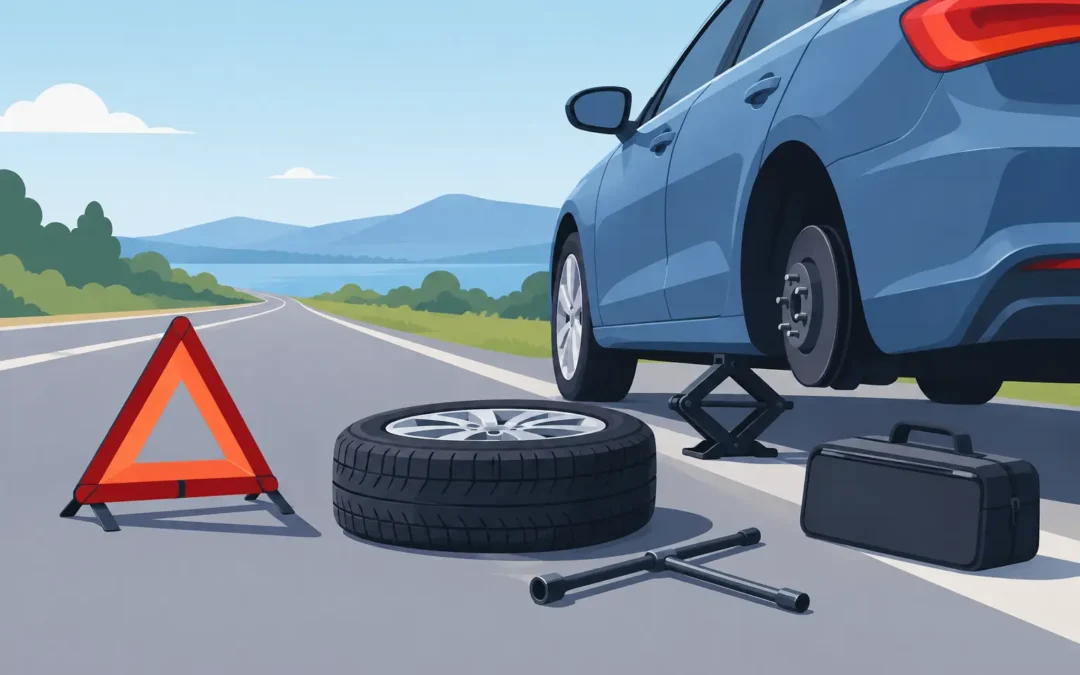
Keep these essentials together in the trunk, cargo area, or a secured storage compartment:
- A properly inflated spare tire or an approved temporary mobility kit
- A jack and lug wrench designed for your vehicle
- Wheel chocks, work gloves, and a small flashlight with fresh batteries
- Reflective triangles, road flares, or a high-visibility vest
- A tire pressure gauge and portable air compressor
- A charged phone, charging cable, and roadside assistance contact information
Check the kit twice a year, ideally when you change seasonal tires or schedule routine maintenance. Tools can go missing after a repair, batteries drain, and spare tires lose pressure slowly over time. If you have never used the factory jack or lug wrench, take a few minutes to locate the designated lifting points in your owner’s manual. Using the wrong point can damage the vehicle or make it unstable.
Inspect the Spare, Not Just the Four Tires
Many drivers discover a flat or damaged spare only after getting a flat on the road. Check the spare’s pressure, tread condition, and age. Full-size spares are the most flexible option because they can often be driven normally if they match the other tires. Compact temporary spares are intended for limited, low-speed use and should be replaced with a proper tire as soon as possible.
Some newer vehicles do not include a spare. Instead, they may have a sealant-and-inflator kit or run-flat tires. Know which system your vehicle has before an emergency occurs. Sealant kits may help with a small tread puncture, but they will not repair a sidewall cut, a large hole, a tire that has come off the rim, or severe impact damage. They can also make later tire repair more complicated.
Know When Changing the Tire Is Not Safe
Being prepared does not mean you should always change the tire yourself. On a busy highway, a narrow shoulder, a blind curve, soft ground, or during heavy rain, the safest choice may be to move as far from traffic as possible and call for help.
If a tire fails while driving, hold the steering wheel firmly and avoid sudden braking or sharp steering. Ease off the accelerator, turn on your hazard lights, and guide the vehicle to a level location away from moving traffic. Do not continue driving on a flat tire unless moving a very short distance is necessary to get out of immediate danger. Driving on it can destroy the tire, damage the wheel, and make a repair impossible.
Once stopped, keep passengers away from traffic. If it is safer for everyone to remain inside with seat belts fastened, do that. Set reflective warning devices only when you can do so without entering an active traffic lane. If you feel exposed or uncomfortable, call roadside assistance rather than attempting a repair.
Practice the Basic Change Process Before You Need It
You do not need to become a technician, but familiarity matters. Practice locating the spare, jack, locking lug-nut key, and wheel wrench in a safe location at home. Make sure the spare can be removed and that the lug wrench fits your wheel nuts.
When it is safe to replace a tire, park on firm, level ground, set the parking brake, and place the vehicle in Park or in gear for a manual transmission. Use wheel chocks if available. Loosen the lug nuts slightly before lifting the vehicle. Then position the jack at the approved lifting point, raise the vehicle only enough to remove the wheel, and install the spare.
Tighten lug nuts in a star pattern so the wheel seats evenly. After lowering the vehicle, tighten them again. A torque wrench is the best way to confirm the correct final tightening, but if you are at the roadside without one, have the lug nuts checked promptly by a service professional. Improper lug-nut torque can lead to wheel damage, brake issues, or a loose wheel.
Never place any part of your body under a vehicle supported only by a jack. Do not attempt a roadside tire change if the vehicle is unstable, the ground is soft, or traffic conditions make the work unsafe.
Build a Plan for Work Vehicles and Fleets
For commercial drivers, a tire problem is more than an inconvenience. It can delay deliveries, affect customer commitments, create compliance concerns, and leave a driver exposed on a highway shoulder. Fleet readiness should include documented pre-trip inspections, tire-pressure checks, matching spare specifications, and a defined process for contacting mobile service.
Drivers should know the vehicle number, tire size, location, direction of travel, and whether the vehicle is loaded when requesting help. These details help a mobile technician arrive with appropriate equipment and replacement options. For trailers and heavy-duty vehicles, verify that spare tires, jacks, and lifting equipment are rated for the application. Passenger-car tools are not suitable for commercial loads.
Tire maintenance records also help spot patterns. If a vehicle repeatedly loses tires on one axle or shows rapid shoulder wear, the cause may be alignment, suspension components, loading practices, or route conditions. Replacing tires without correcting the source of the problem only delays the next breakdown.
After the Emergency, Do Not Treat It as Finished
A spare tire gets you to safety, not necessarily back to normal driving. Have the failed tire inspected as soon as possible. Many tread punctures can be repaired safely if the damage is within the repairable area and the tire has not been driven flat. Sidewall damage, large punctures, separated tread, and damaged internal structure generally require replacement.
Also inspect the wheel. A pothole or curb impact can bend a rim, affect balance, or knock the alignment out of specification. If the steering wheel is off-center, the vehicle pulls, or you notice vibration after the incident, schedule an inspection. Precision tire and alignment service can prevent the new tire from wearing out early.
Milton 401 Tire & Alignment Centre helps drivers and fleet operators stay road-ready with tire repair, replacement, alignment, and responsive roadside support when a problem cannot wait. The best time to prepare is while your tires are still rolling smoothly, your spare is still accessible, and you can make decisions without traffic rushing past your door.