
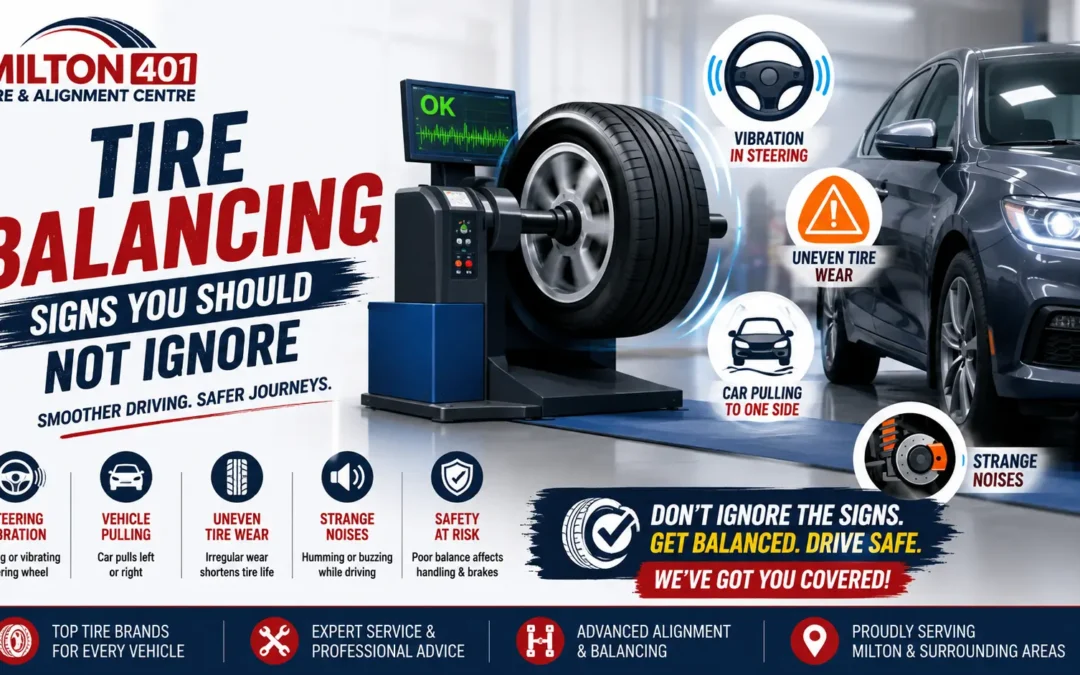
A steering wheel that starts shaking at highway speed is not something to get used to. In many cases, tire balancing is the service that restores a smoother ride, protects your tires, and helps prevent extra wear on suspension components. For a daily commuter, it can make the drive noticeably more comfortable. For a truck or fleet vehicle, it can help reduce downtime and keep a working vehicle road-ready.
What Tire Balancing Actually Does
A tire and wheel assembly is never perfectly uniform. The tire may have slightly more material in one area, and the wheel itself can have small variations in weight. When that assembly spins, even a minor imbalance creates a centrifugal force. At low speeds, you may not notice it. At highway speeds, it can become a vibration through the steering wheel, floor, seat, or cab.
During tire balancing, a technician mounts the wheel and tire assembly on a balancing machine. The machine spins the assembly, identifies where weight is unevenly distributed, and shows the technician where to install small counterweights. Those weights offset the imbalance so the wheel rotates more evenly.
This is precision work, not a visual guess. The correct amount of weight and placement matter. A wheel can be balanced on one plane or two. Modern vehicles commonly need dynamic balancing, which corrects imbalance on both the inner and outer sides of the wheel. This helps prevent vibration that may otherwise show up in the steering wheel or throughout the vehicle.
Signs Your Vehicle May Need Tire Balancing
Vibration is the most common warning sign, but it is not the only one. Pay attention to changes in how the vehicle feels, especially after a tire installation, pothole impact, or seasonal tire change.
You may need a balance check if you notice:
- Steering wheel vibration that gets worse around 50 to 70 mph
- A shake in the seat, floor, or cab at consistent road speeds
- Uneven or cupped tire wear
- A wheel weight missing after driving through rough roads or a car wash
- New vibration following tire replacement, repair, rotation, or wheel service
The location of the vibration can offer a clue. A vibration felt mainly through the steering wheel often points to a front wheel issue. A vibration in the seat or rear of the vehicle may be related to a rear wheel. Still, diagnosis matters. Tires, wheels, alignment angles, suspension parts, and even brake components can cause similar symptoms.
A professional inspection prevents replacing parts or booking services based on guesswork. If the wheel is bent, the tire has internal damage, or a suspension component is worn, adding wheel weights alone will not solve the underlying problem.
Tire Balancing vs. Wheel Alignment
Tire balancing and wheel alignment are often requested together, but they correct different issues.
Balancing addresses weight distribution around the rotating tire and wheel assembly. Its main purpose is to eliminate vibration caused by imbalance. Wheel alignment adjusts the angles of the wheels so they point and track correctly according to manufacturer specifications. Its main purpose is to improve straight-line driving, steering response, and tire wear.
A vehicle can have properly balanced tires and still pull to one side because the alignment is off. It can also have correct alignment but vibrate at highway speed because a wheel is out of balance. If your vehicle pulls, the steering wheel sits off-center, or the tire tread is wearing heavily on one edge, alignment should be checked. If the vehicle shakes at a certain speed, balancing is a likely starting point.
For the best tire life, both services matter. Proper alignment protects the tread from being scrubbed away unevenly. Proper balance helps the tire rotate without repeated vibration and stress. Neither replaces the other.
Why Delaying Balance Service Can Cost More
A small vibration may feel like a comfort issue, but it can turn into a tire and maintenance expense. An imbalanced wheel repeatedly transfers force into the tire, wheel bearing, steering system, shocks, struts, and suspension. The severity depends on the vehicle, road speed, tire size, and how far it is driven before service.
Tires can develop uneven wear patterns that cannot always be corrected. Once a tire is cupped or scalloped, balancing it may stop the original cause of the vibration, but the damaged tread can continue making noise or creating a rough ride. Replacing tires early is usually more expensive than correcting a simple balance issue when it first appears.
For commercial vehicles, the cost can be broader. Vibration can affect driver comfort on long routes, contribute to premature tire wear, and take a vehicle out of service when it should be moving freight, equipment, or customers. Routine tire inspections and balance checks help fleet operators identify problems before they become roadside calls.
When Should Tires Be Balanced?
New tires should be balanced before they go on the vehicle. Tires should also be checked after they are repaired, rotated, removed for seasonal storage, or remounted on wheels. If a wheel weight falls off, the assembly should be rebalanced rather than waiting for a shake to develop.
There is no single mileage interval that fits every vehicle. Driving conditions make a difference. Frequent potholes, construction routes, gravel yards, curbs, and rough highway shoulders can knock off weights or damage a wheel. Heavy-duty trucks and trailers may need closer attention because load weight, long operating hours, and tire size can amplify the effects of imbalance.
As a practical rule, schedule an inspection whenever new vibration starts or when tires are serviced. During a routine rotation, it also makes sense to inspect tread wear, tire pressure, wheel condition, and the presence of existing wheel weights. Those checks give technicians useful information about whether balancing, alignment, or additional repairs are needed.
What a Proper Balance Appointment Includes
Good results start before the balancing machine turns on. The technician should inspect the tire for visible damage, nails, uneven wear, bulges, and signs of internal separation. The wheel should be checked for cracks, bends, corrosion, or debris at the mounting surface. A dirty or damaged wheel can affect how the tire seats and how accurately it balances.
The tire is then mounted securely on the balancer using the correct adapter. The machine measures imbalance and directs placement of the appropriate weights. Depending on the wheel design, technicians may use clip-on weights or adhesive weights placed behind the spokes for a cleaner appearance. After weights are installed, the assembly is spun again to confirm the correction.
If a tire continues to vibrate after standard balancing, further testing may be needed. A road-force measurement can identify variations in tire stiffness and wheel runout that a conventional balance alone may not reveal. In some cases, repositioning the tire on the wheel helps. In others, the tire or wheel may need replacement.
This is why the lowest-priced balance is not always the best value. The service should include accurate equipment, a technician who recognizes related problems, and a clear explanation when balancing is not the whole answer.
Special Considerations for Trucks, Trailers, and Fleets
Commercial tire balancing has the same basic goal as passenger vehicle service, but the stakes can be higher. Larger tires and wheels carry more mass, operate under heavier loads, and often spend more hours at speed. A small issue can become more noticeable in the cab and more costly across a fleet.
Trailer tires deserve attention as well. Drivers may not feel a trailer vibration as directly as they would in a steering wheel, yet imbalance can still contribute to irregular wear and reduce tire service life. Regular inspections are particularly useful for trailers that operate through yards, loading areas, uneven surfaces, and long highway routes.
Fleet maintenance works best when it is scheduled around operations rather than after a vehicle is already sidelined. Recording tire wear patterns, rotation dates, repairs, and vibration complaints helps identify repeat issues. If the same position repeatedly loses weights or shows abnormal wear, the cause may be wheel damage, suspension wear, loading practices, or route conditions.
Do Not Ignore a New Vibration
Not every shake is caused by an out-of-balance tire. A vibration during braking may point to brake rotor issues. A shake after a hard pothole impact may involve a bent wheel or damaged tire. A pull or wandering feeling can be related to alignment or worn steering components. The right response is not to assume – it is to have the vehicle inspected promptly.
If your vehicle is smooth one day and develops a vibration the next, book service before the problem has time to wear down expensive parts. A precise balance check can be quick, but the benefit reaches beyond a smoother ride: better tire life, more confident handling, and fewer surprises when you need your vehicle to perform.