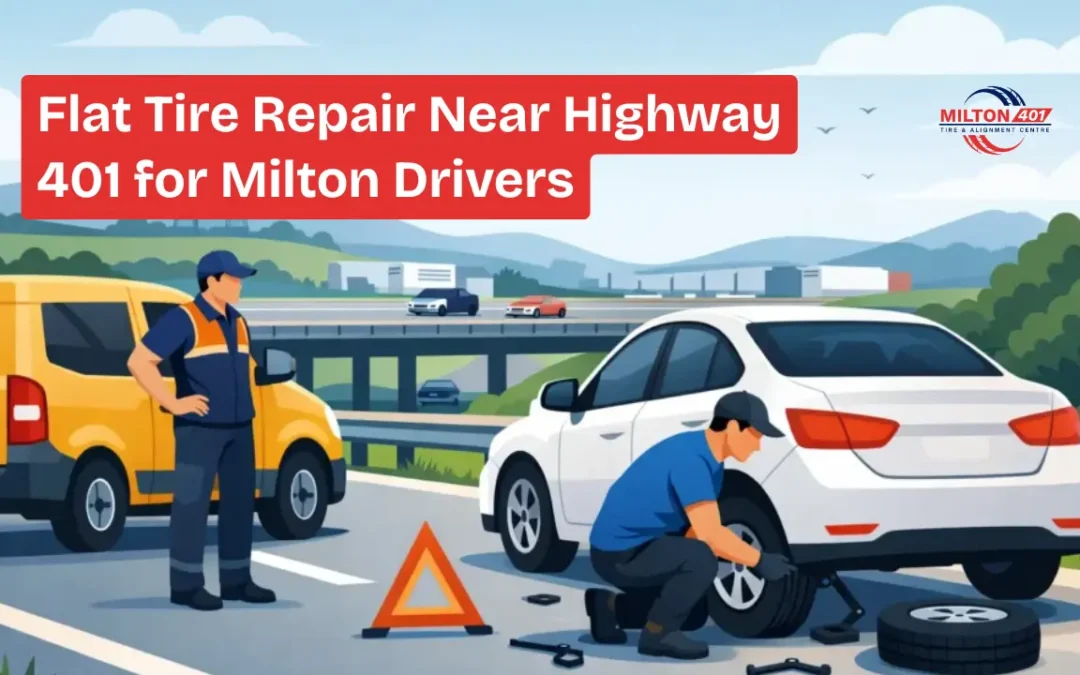
A tire can lose pressure fast on Highway 401, and the first few minutes matter more than the repair itself. The question behind flat tire repair near Highway 401 – what Milton drivers should do first – is really about protecting people, preventing wheel damage, and getting professional help without creating a bigger roadside risk.
Get Off the Travel Lane Safely
If you feel a sudden pull in the steering wheel, hear repeated thumping, or see a low-tire warning, do not brake hard or make an abrupt lane change. Keep both hands on the wheel, ease off the accelerator, and guide the vehicle toward the right shoulder or the nearest safe exit. Turn on your hazard lights as soon as you recognize a problem.
A flat tire on the 401 is different from a flat in a parking lot. Traffic moves quickly, shoulder space can be limited, and drivers may not have much time to react. Your priority is to get out of live traffic, not to inspect the tire immediately.
If the vehicle cannot safely reach the shoulder, stay in your lane as steadily as possible while reducing speed. Call 911 if you are stopped in an active lane, have been in a collision, or believe the location creates an immediate danger. Once stopped in a safer area, keep your hazards on and make sure passengers remain away from traffic.
Do Not Drive on a Completely Flat Tire
It can be tempting to keep driving to the next exit or service station, especially when the shoulder feels exposed. That decision depends on the tire’s condition and your exact location. A tire that is only losing air gradually may allow enough controlled movement to reach a genuinely safer spot. A fully deflated tire, however, can be destroyed within a very short distance.
Driving on a flat tire can damage the sidewall, ruin the tire beyond repair, bend the wheel, and affect suspension or alignment components. A repairable puncture can quickly become a full tire replacement when the vehicle continues rolling on it.
If you are already safely off the roadway, stop. Do not attempt to “limp” the vehicle farther simply because the destination is close. The cost of a roadside call is often far less than replacing a tire and wheel after avoidable damage.
Check Your Position Before Stepping Outside
Before opening a door, look carefully for traffic. On a narrow shoulder, it may be safer to remain inside the vehicle with seat belts fastened while you arrange assistance. If you need to exit, use the passenger-side door whenever possible and move well away from the roadway, behind a guardrail if one is available.
Do not stand beside the flat tire facing traffic. Do not place yourself between the vehicle and passing vehicles. Commercial drivers should also consider trailer position, load security, and whether the disabled unit is visible enough for approaching traffic.
Confirm the Problem Without Taking Risks
You do not need to diagnose every cause of a flat tire on the shoulder. A quick visual check is enough once you are in a safe position. Look for an obviously collapsed tire, a screw or nail in the tread, a torn sidewall, or damage from a pothole or road debris.
Avoid pulling out a nail or screw. The object may be slowing the air loss, and removing it can make the tire deflate immediately. A technician can assess whether the puncture is within the repairable tread area and whether the tire has internal damage.
The location of the damage matters. In many cases, a small puncture in the center tread area can be repaired properly from the inside. Damage near the shoulder or sidewall usually cannot be safely repaired. Tires driven while flat, tires with separated cords, and tires with large cuts may also need replacement.
Decide Whether a Spare Tire Is the Right Move
Changing to a spare can make sense in a safe, open location with firm ground, good visibility, and enough room away from traffic. On Highway 401, those conditions are not always present. A spare-tire change can put an untrained driver close to fast-moving vehicles for far too long.
Many newer vehicles have no spare at all. Others use a compact temporary spare with strict speed and distance limits. That spare is designed to get you to a repair facility, not to support regular highway driving or a loaded work vehicle.
For a truck, trailer, cargo van, or fleet vehicle, roadside tire work requires even more caution. Wheel size, vehicle weight, cargo, dual-tire configurations, and specialized equipment can make a do-it-yourself repair unsafe and impractical. Mobile service is often the faster option because it avoids the risks and delays of arranging towing first.
Call for Roadside Tire Help With the Right Details
When you contact a roadside tire provider, clear details help the technician arrive prepared. Share your direction of travel, the nearest exit or visible marker, your vehicle type, tire size if known, and whether you have a spare. Let them know if the tire is completely flat, visibly damaged, or if the wheel may have struck a pothole or curb.
For commercial vehicles, provide the truck or trailer type, axle position of the damaged tire, load status, and any site or dispatch requirements. Fleet operators can reduce downtime by keeping vehicle tire specifications and unit numbers readily available to drivers.
Milton 401 Tire & Alignment Centre provides mobile and roadside tire support for drivers and commercial operators who need prompt service near major GTA routes. The right roadside response may involve a proper puncture repair, a replacement tire, a spare installation, or a recommendation to tow the vehicle if the wheel or suspension appears damaged.
What a Proper Flat Tire Repair Should Include
A quick plug inserted from the outside may seem convenient, but it does not always reveal damage inside the tire. A professional repair starts with removing the tire from the wheel and inspecting the interior. This lets the technician check for heat damage, crushed sidewalls, moisture, and objects that may have caused a slow leak.
When the tire qualifies for repair, the puncture should be sealed correctly from the inside and the tire reinstalled, balanced if necessary, and inflated to the vehicle manufacturer’s recommended pressure. The wheel should also be checked for cracks, bends, corrosion around the bead, or valve issues that can cause recurring air loss.
If the flat followed a strong pothole impact, ask for an alignment inspection as well. A wheel can remain inflated after an impact while the vehicle’s alignment is knocked out of specification. Warning signs include a steering wheel that is off-center, pulling to one side, vibration, or uneven tire wear afterward.
Prevent the Next Highway Tire Emergency
Highway flats are not always avoidable, but routine checks reduce the odds of being stranded. Check tire pressure monthly when the tires are cold, including the spare if your vehicle has one. Follow the pressure listed on the driver’s door placard rather than relying on the maximum pressure molded into the tire sidewall.
Inspect tread for embedded objects, cracking, bulges, and uneven wear. If one edge of a tire is wearing faster than the other, schedule an alignment check before the problem becomes a blowout risk. Drivers who regularly travel the 401 should also keep a charged phone, reflective gear, and current roadside contact information in the vehicle.
For fleets, regular tire inspections, pressure monitoring, rotation schedules, and alignment service are practical uptime measures. Tires carry the weight of the operation, and small maintenance issues become expensive when they turn into roadside failures.
A flat tire near Highway 401 is stressful, but it does not have to become a dangerous or costly setback. Get to a safe location, avoid driving on a fully deflated tire, and let a qualified technician determine whether repair or replacement is the safe path forward.