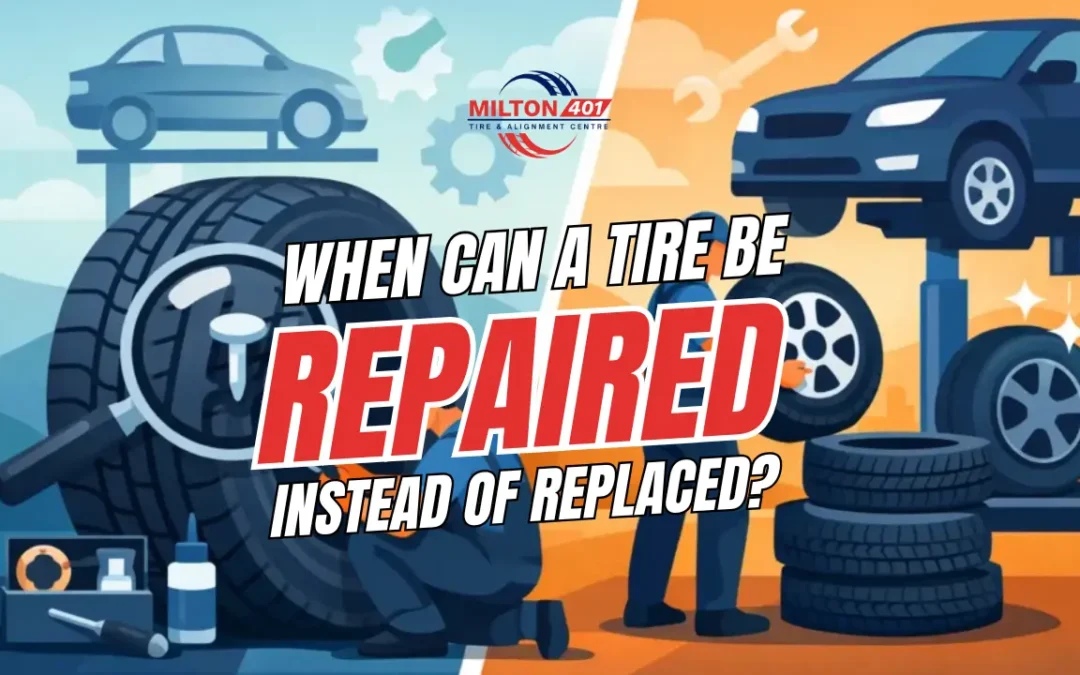
A screw in your tire does not automatically mean you need to buy a new one. But waiting too long, driving on a low tire, or relying on a quick exterior plug can turn a repairable puncture into a costly replacement. So, when can a tire be repaired instead of replaced? The answer depends on where the damage is, how large it is, and what happened to the tire after it lost air.
A proper inspection is the only safe way to make that call. A technician needs to remove the tire from the wheel, inspect the inside, and check for hidden damage before recommending a repair or replacement.
When Can a Tire Be Repaired Instead of Replaced?
Most repairable tire damage is a simple puncture in the center section of the tread, often caused by a nail or screw. The tire must still have enough usable tread, its internal structure must be intact, and it cannot have been driven while significantly underinflated.
The puncture must be in the repairable tread area
The repairable area is the central portion of the tread, sometimes called the crown. This is the thick, reinforced part of the tire designed to contact the road. A small puncture in this area can often be repaired safely with the right method.
Damage near the outer edge of the tread is more concerning. The shoulder flexes much more as the tire rolls, and the sidewall flexes with every rotation. A puncture in either area generally requires tire replacement because a repair cannot reliably restore the tire’s structural strength.
If you can see the puncture close to the sidewall, do not assume it can be fixed. Bring the vehicle in for an inspection rather than continuing to add air and drive.
The hole must be small and clean
As a general rule, a straight puncture up to 1/4 inch in diameter can often be repaired if it is in the correct tread area. Nail and screw punctures commonly fall within this range.
A larger hole, a jagged tear, or damage caused by road debris may not be repairable. The same applies to a puncture that entered at a sharp angle and damaged a wider section of the tire beneath the tread. What looks small from the outside can be much larger inside the casing.
The tire must not have internal damage
This is where many flat-tire decisions change. When a tire is driven with very low pressure, the sidewalls can over-flex and overheat. That may damage the internal rubber and cords even if the tire appears normal once it is inflated again.
A tire that has been driven flat, or nearly flat, should be removed and inspected internally. Signs of internal damage can include scuffing, loose rubber, heat damage, or broken cords. In those cases, replacement is the safer choice.
Why an Internal Tire Repair Matters
A temporary exterior plug may stop an air leak, but it does not allow a technician to inspect the tire from the inside. It also does not fully seal the inner liner, which is the layer that helps the tire retain air.
A professional repair typically uses a combination patch and plug installed from inside the tire. The plug fills the puncture channel, while the patch seals the inner liner. Before the repair is installed, the puncture area is prepared correctly and the inside of the tire is checked for damage.
That process takes more time than inserting a roadside plug, but it provides a repair that can be evaluated properly. For drivers who depend on their vehicle every day, and for commercial operators managing uptime, that difference matters.
Damage That Usually Requires Tire Replacement
Some tire damage cannot be repaired safely, regardless of how much tread is left. Replacement is usually recommended when the tire has:
- A puncture in the sidewall or shoulder area
- A cut, tear, bulge, or exposed cords
- Been driven while flat or severely underinflated
- A puncture larger than the acceptable repair limit
- Severe uneven wear, very low tread, or visible dry cracking
Bulges deserve special attention. A bubble on the sidewall often means the internal cords have been damaged, commonly after striking a pothole or curb. The tire may still hold air, but its structure has been compromised. It should be replaced promptly.
Tread depth also affects the decision. Repairing a tire that is already close to worn out may not be good value, particularly if wet-weather traction has declined. A technician can help you weigh the remaining life of the tire against the cost of a repair and the need to match tires across the same axle.
Can a Tire Be Repaired More Than Once?
Sometimes, yes. Multiple repairs may be possible when the punctures are small, properly spaced apart, and all located in the repairable tread area. However, each repair changes the tire’s condition, and there are limits to what is sensible and safe.
Punctures that are too close together can weaken the same section of the tire. A tire with several previous repairs may also be a poor candidate for continued service, especially on a vehicle that carries heavy loads, travels at highway speeds, or operates daily for business.
For trucks, trailers, and fleet vehicles, repair decisions should account for load rating, service conditions, axle position, and the cost of unexpected downtime. A repair that is acceptable for a lightly used passenger vehicle may not be the right operational decision for a loaded commercial unit.
Do Not Ignore the Cause of the Flat
Finding and removing the nail is only part of the job. The tire should also be checked for bead leaks, valve stem problems, wheel damage, and uneven wear. A bent wheel, corroded bead seat, or damaged valve can cause recurring air loss that looks like a puncture issue.
Uneven wear can point to alignment or suspension concerns. If one edge of the tire is wearing faster than the rest, repairing the puncture without correcting the underlying issue may leave you with another tire problem soon after. A tire inspection is a good time to check pressure, tread condition, wheel balance, and alignment wear patterns.
What to Do After You Notice a Nail or Low Tire
If the tire is holding air and the vehicle is handling normally, avoid pulling the object out before inspection. The nail or screw may be slowing the leak, and removing it can cause the tire to lose pressure quickly. Check the pressure, add air only if needed to reach the recommended level, and arrange service as soon as possible.
If the tire is visibly flat, the sidewall looks damaged, or the vehicle has been driven on a low tire, stop driving when it is safe to do so. Continuing to drive can destroy a tire that might otherwise have been repairable. Use your spare if appropriate, or request mobile or roadside tire service.
Milton 401 Tire & Alignment Centre can inspect the tire, identify whether a safe internal repair is possible, and replace it when the damage calls for a new tire. The right decision is not always the cheapest immediate option, but it should always protect your safety, your vehicle, and your time on the road.
A fast inspection today can prevent a roadside stop tomorrow. If you notice air loss, vibration, or a visible object in the tread, get the tire checked before the damage has a chance to spread.